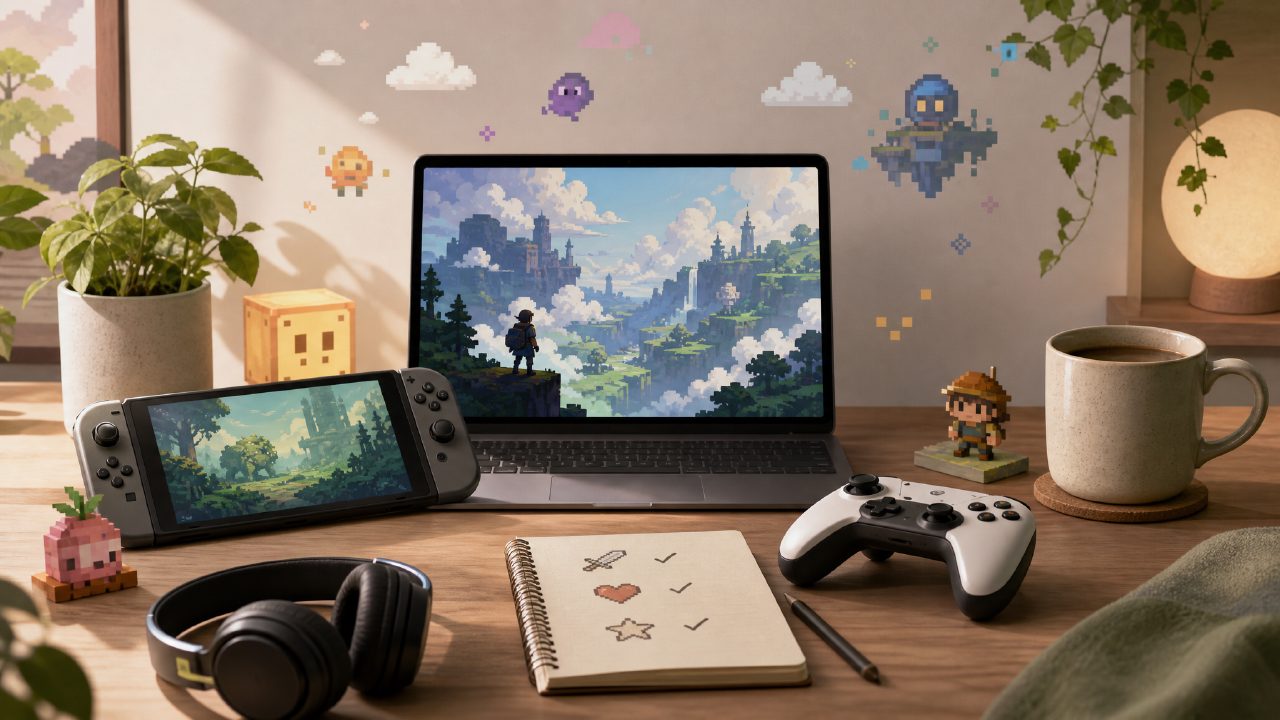
Every time I open the store to browse indie games, I have to mentally prepare myself first. It's not that the games are bad, but there are too many choices. Relying solely on ratings and screenshots makes it impossible to tell which ones are truly worth your time and which just look good. I recently set aside a few days to thoroughly play through several highly acclaimed indie games on my list, to see if they really deserve a spot on your playlist.
Before You Start, Clarify Your Expectations
When I first began picking games, I did one thing—I opened my game ranking favorites folder and pulled out a few indie games I'd always wanted to try but never had time for. My screening logic was pretty simple: either innovative gameplay or particularly strong storytelling; nice visuals are a bonus but not a must.
After the first round of filtering, I noticed a problem: many indie games' promotional videos are edited too well, making the actual gameplay pacing completely different. For example, one puzzle-focused game had tight pacing and a dark, stylish aesthetic in the trailer, but the first half-hour was mostly running around and reading text, with very low puzzle density. It's not that it's bad, but if you expect something brain-burning right from the start, you might be disappointed.
So I think a true independent game recommendation shouldn't just say "this game is fun"—it should also tell you under what circumstances it's fun and when it might make you restless.
Tested Several Games, Sharing Specific Trade-offs
This time, I focused on three types of works: one narrative-driven, one action-oriented, and one two-player co-op. The latter surprised me the most.
Let's start with the co-op game. I invited a friend who rarely plays games to try it together, and we both got hooked. Its controls are very simple—basically just using the joystick and two buttons to get started—but the coordination difficulty gradually increases as levels progress. Many people looking for two-player Switch games are most afraid that "the other player will lose interest," but this game completely avoids that because its forgiveness mechanism is well-designed. One person's mistake won't restart the entire level, greatly reducing frustration.
However, to be honest, its visual style is quite simple. If you care deeply about artistic detail, you might find it a bit "rough." But in my opinion, this is a reasonable compromise to maintain high frame rates and smooth controls. After all, indie games have limited resources—spending money on feel and level design is more practical than on texture details.
The narrative-driven game was a completely different experience. It has a large amount of text, roughly equivalent to reading a novella. If you're the type to look for "slowly flip through text" works in Nintendo game recommendations, this one has a high chance of suiting your taste. But its pacing issue is obvious: the early world-building takes too long—about one to two hours before you really enter the core storyline. I quit twice in the middle and only got absorbed on the third try. If you only have fragmented time, you might need to reconsider.
As for the action game, my personal feeling is "high ceiling but steep learning curve." Its combat system is deep, with so many move combinations that you might not fully master them even after a week of study. But the initial tutorial is quite restrained; many mechanics require you to figure them out through trial and error. It's not the kind you can pick up and enjoy immediately—it's more suited for hardcore players who enjoy studying systems.
Helping You Decide: Are These Games Right for You?
If you're currently searching for independent game recommendations, you probably already have a few candidates in mind. I suggest you first ask yourself: What do you most want to get from a game right now? Pure relaxation, deep immersion, or having fun with friends? Different answers point to completely different choices.
Take the co-op game mentioned above—its ideal scenario is having a regular partner willing to try new games with you. If you only occasionally hang out with friends, you might be better off with games that have "short rounds and easy pick-up-and-play." The narrative-driven game is for people who can spare two to three hours on weekends and are willing to slowly step into another world. Playing in fragmented time will significantly diminish the experience.
Another thing I want to mention: the completeness of indie games varies greatly. Not every "great idea" translates into a full playable experience. For example, one game I quit after the opening had a novel core mechanic, but everything else—stat progression, map design, control feedback—was clearly not polished. In that case, even if the creativity is brilliant, I'd hardly recommend spending time on it.
If you're unsure which one to buy, try browsing player reviews in a game guide. Focus not on five-star ratings, but on those "three-star reviews with long personal experiences." These people can often help you spot pitfalls in advance.
A Few Final Honest Words
Whether it's Switch game recommendations or indie game recommendations on other platforms, choosing the right game essentially comes down to "choosing the right expectations." Don't buy a game just because its screenshots look nice or it has high ratings. First, think about how much time you're willing to invest and how much trial-and-error cost you can accept.
After this test, my takeaway is: good indie games are indeed worth playing, but they aren't necessarily "suitable for everyone." When selecting, look more at specific gameplay descriptions and player reviews, not just promotional material. After all, time is limited—spending your precious hours on games that truly immerse you is what matters most.
Comments
Leave a Comment