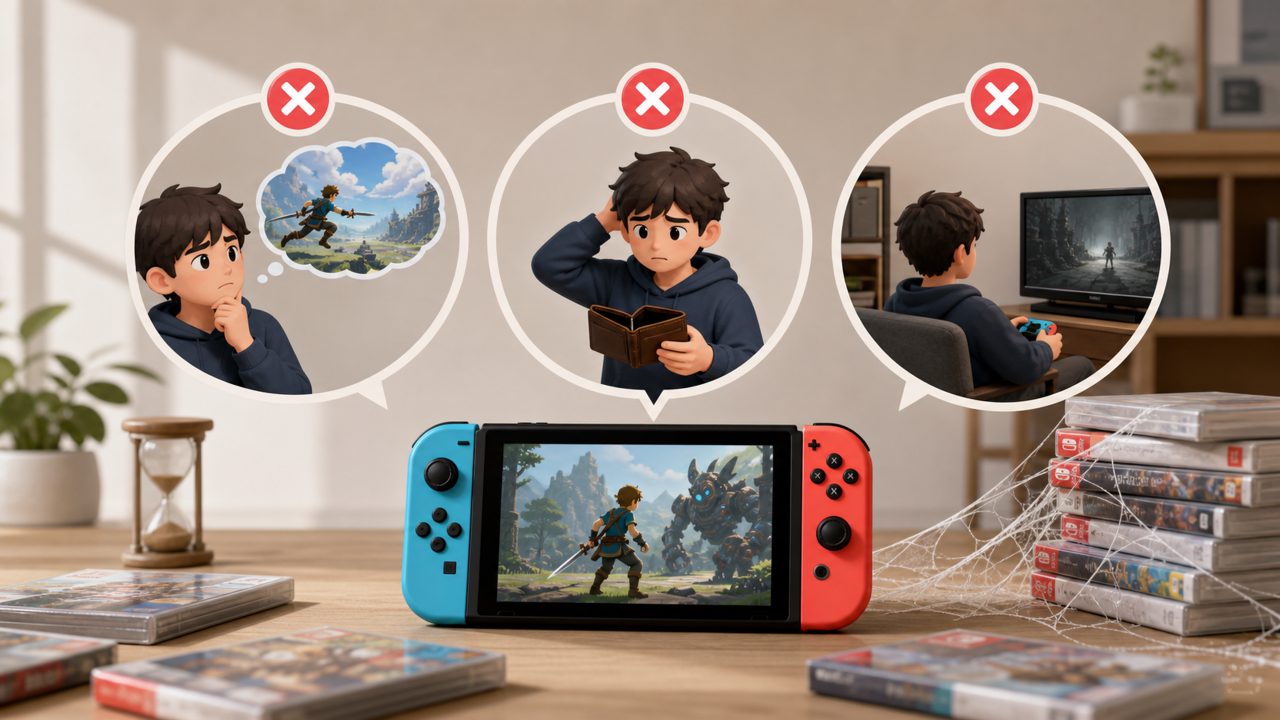
Honestly, I've seen too many people buy a Switch and immediately go for games that "look fun." And what happens? They play for two days and then it collects dust, or they realize it's not what they expected. Action games on Switch are a huge minefield, especially if you just look at the cover or buy in after hearing someone hype it up.
This article is specifically to help you avoid the traps, clearly explaining each common pitfall. Next time you buy a game, at least you'll know what to look for and what to watch out for.
Misconception 1: Action games ≈ mindless hack-and-slash? You're missing out big time
Many people think action games are just pressing one button and fighting endlessly. There are such games, but the truly worthwhile action games on Switch often have much deeper elements. For example, The Legend of Zelda: Breath of the Wild looks like an action-adventure, but if you treat it like a musou game, you might not even make it out of the first shrine. It tests your use of the environment, weapon durability management, and puzzle-solving skills. It's not "mindless"—it's "you have a brain and need to use it."
Another common issue: You think you're buying an action game, but it spends most of its time on cutscenes or running around. That doesn't mean the game is bad; it just doesn't match your expectation of "pick up and have fun immediately." So before buying, I suggest you check out actual gameplay footage on game rankings or game databases, rather than just looking at scores and trailers. Many highly rated games actually have a slow pace.
Misconception 2: Joy-Con aren't suitable for intense gameplay
This is a hardware pitfall that many beginners overlook. The Switch's Joy-Con are small and have short button travel. If you play action games that require frequent dodging, precise blocking, or quick input combos—like Hollow Knight or Cuphead—your fingers will get sore easily, and accidental inputs happen often. Not to mention the infamous stick drift issue: under intense use, the joystick lifespan visibly shortens.
My advice: If you plan to play action games long-term, invest in a Pro Controller. Don't skimp on this, or you might end up spending more on repairs in a few months. Also, if you buy the console to play with friends, many two-player Switch games (like Overcooked or Mario Kart) also put heavy wear on the Joy-Con, so be prepared.
Misconception 3: Digital vs. physical? This trap runs deeper than you think
Many people think digital is convenient because you don't have to swap cartridges. But action games have a special problem: load times and storage space. The Switch's hardware is limited, and some action games have noticeable stuttering during scene transitions. Physical copies don't have an advantage in loading, but at least you can resell them after finishing. Once you buy a digital copy and don't like it or find it too hard, your money is truly down the drain.
Another thing many don't know: Some action games have strict save restrictions. For example, in Dark Souls Remastered, if you create a save file on the digital version and want to start over, you can, but you have to manually delete the save from the system—it's a hassle. With a physical copy, you can at least lend the cartridge to a friend or sell it. Especially for action games you only want to play through once, physical is clearly more cost-effective.
If you still want to go digital, I recommend first checking reviews on Nintendo game recommendations to confirm the game has high replay value and challenge before pulling the trigger.
Misconception 4: Indie action games ≠ cheap and low quality
Many players have a bias against indie games, thinking the graphics are poor and content is thin. But on the Switch, indie action games actually hold up half the sky. Dead Cells, Hades, Celeste—which of these isn't a masterpiece in the action genre? The visuals may be pixel art or hand-drawn, but the gameplay and level design crush many AAA titles.
But here's the trap: Indie games often have high difficulty and little tutorial guidance. If you're used to games like Zelda that guide you every step of the way, jumping into Salt and Sanctuary might have you questioning your life choices. So before buying, it's best to check the indie game recommendations or Switch game recommendations forums for others' hands-on experiences to confirm the difficulty is within your comfort zone.
Another easily overlooked issue is language. Many indie action games do not support Chinese, and they often have a fair amount of story text (e.g., Katana Zero). If you're not proficient in English or Japanese, your experience will suffer significantly.
Before choosing an action game, ask yourself three questions
Think before you buy, and you'll avoid 80% of the pitfalls:
1. Do you prefer "feeling powerful" or "challenging yourself"?
If the former, go for games with difficulty options and fast pacing, like the Bayonetta series. If the latter, head toward Souls-like or Roguelike titles, but prepare to die repeatedly.
2. Will you be playing in TV mode or handheld mode?
In handheld mode, action game details become smaller, and text may be hard to read. Some games also drop frames in handheld mode—for example, the Switch version of Marvel's Avengers is a disaster. This is usually tested in game databases for frame rate, so remember to check.
3. Are you a solo player or often play with others?
Many action games are single-player only. It's awkward to buy one and realize you can't share it with friends. If you want to play together, two-player Switch games lists specifically curate local co-op titles—just pick from there to avoid trial and error.
One last word: don't follow the hype. The game everyone praises might not fit your play style and patience. Check real player reviews on game rankings and read indie game recommendation posts about pitfalls—that's far more useful. After all, spending three hundred bucks on a cartridge that collects dust is worse than saving that money for the next discount wave.
Comments
Leave a Comment