Many people's first thought after getting a Switch is: I want to play some "action games."
That idea is fine, but the word "action" on the Switch is actually a big trap. You might think it's fast-paced combos like Devil May Cry, but what you get turns out to be turn-based; you might expect an open-world hack-and-slash, but you find you need to practice combos for half an hour first. This category on the eShop looks very broad, but only about half of it truly matches your controller instincts.
Below are a few common pitfalls to help you save some money on tuition.
First Pitfall: Treating the "Action" Tag as a Synonym for "Thrilling"
Many games labeled Action on the Switch actually have a pace so slow it makes you drowsy. For example, some hardcore titles with such lengthy start-up and recovery animations that you could take a sip of water, or so-called action-adventures where you spend a lot of time on running around and dialog. You want the thrill of the controller vibrating at any moment, but the game makes you watch a ten-minute cutscene first.
The way to avoid this pitfall is simple: watch over 2 minutes of actual gameplay footage, not just trailer edits. Trailers always show the highlights; real gameplay reveals the true pacing.
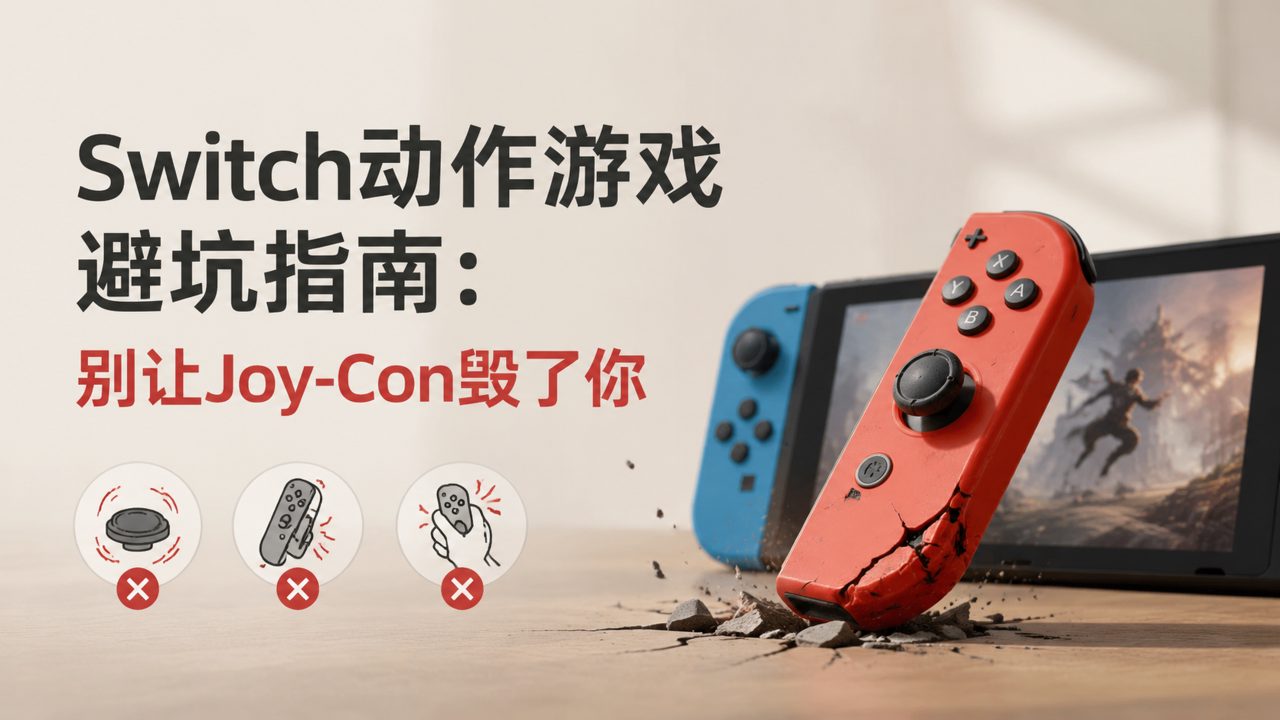
Second Pitfall: Underestimating the Physical Limitations of Joy-Con
Action games require high button-press frequency and analog stick precision. Many people don't notice issues early on when they're hooked on first-party titles from "Nintendo Game Recommendations," because Nintendo's own action games often have special Joy-Con calibration adjustments. But once you start playing third-party pure action games or indie games that require rapid, consecutive input commands, the Joy-Con's small sticks and short travel distance expose their weaknesses.
Specific issues: occasional input lag during intense battles, or stick drift after frequent combo movements. Don't wait until the final boss phase when your character suddenly spins in place, only to realize your Joy-Con needs repairs. If you plan to play action games long-term, it's advisable to prepare a Pro Controller as your primary input tool from the start.
Third Pitfall: Overlooking the Entrance Barriers of "Multiplayer Mode"
Many people buy "Two-Player Switch Games" to play with a partner or friend. But even among action games, the local co-op experience varies greatly. Some games support a full dual-player story mode where you both play through the entire game, like Kirby and the Forgotten Land's two-player mode, which is very smooth and stress-free even for beginners.
However, many action games labeled "supports multiplayer" only offer competitive versus modes or simple co-op stages as an add-on, with no independent character progression or story support. You excitedly bring someone into the game, only to have them lose interest after two levels. Before choosing a game, check whether its multiplayer mode is "full co-op throughout" or "just allows online play."
Fourth Pitfall: Getting Tricked by "Indie Game Recommendations" for Action Masterpieces
The quality of indie action games on Switch is uneven. There are examples like Hollow Knight with hardcore feel and high value, but also many so-called retro action games that play like Flash games. Many game tags are filled with words like "satisfying combat" and "fast-paced battles," but the actual hit feedback feels soft, and enemy reaction animations are stiff.
The pitfall here mainly lies in the review sources. Don't just look at Steam ratings or rankings on game charts; rankings only tell you a game is popular among a certain group, not that its action feel matches your expectations. It's best to look for performance reviews specifically for the Switch version—many indie action games run at a stable 60fps on PC, but drop to 30fps with stuttering on Switch, which is very detrimental in action games.
Fifth Pitfall: Not Checking Whether It Supports "Motion Controls" Before Buying
Some action games advertise "motion-assisted aiming" or "motion dodging," which sounds cool, but the actual experience often fails. Motion controls require extremely high calibration; done well like The Legend of Zelda's bow aiming, it's a pleasure; done poorly, it feels like shaking an insensitive level—you intend to dodge left, but the system thinks you're crouching.
Additionally, some Japanese action games force motion controls on Switch and don't allow them to be fully disabled. If you're used to traditional button controls, it's advisable to check game encyclopedias or community discussions in advance to confirm whether the game supports a motion control toggle.
Summary: Criteria for Choosing Action Games
Frame rate over graphics, Pro Controller over Joy-Con, real gameplay over trailers. Playing action games on Switch, adaptation matters more than the game's own rating. Rather than following the trend to buy a hot topic title, first confirm whether it truly suits your play scenario—whether it's lying down in handheld mode casually playing, or hooking it up to the TV to focus on high-difficulty challenges.
To save trouble, just browse Switch game recommendations and community live discussions to see if players have encountered Joy-Con drift or frame rate stutters—that's much more reliable than official descriptions.
Comments
Leave a Comment