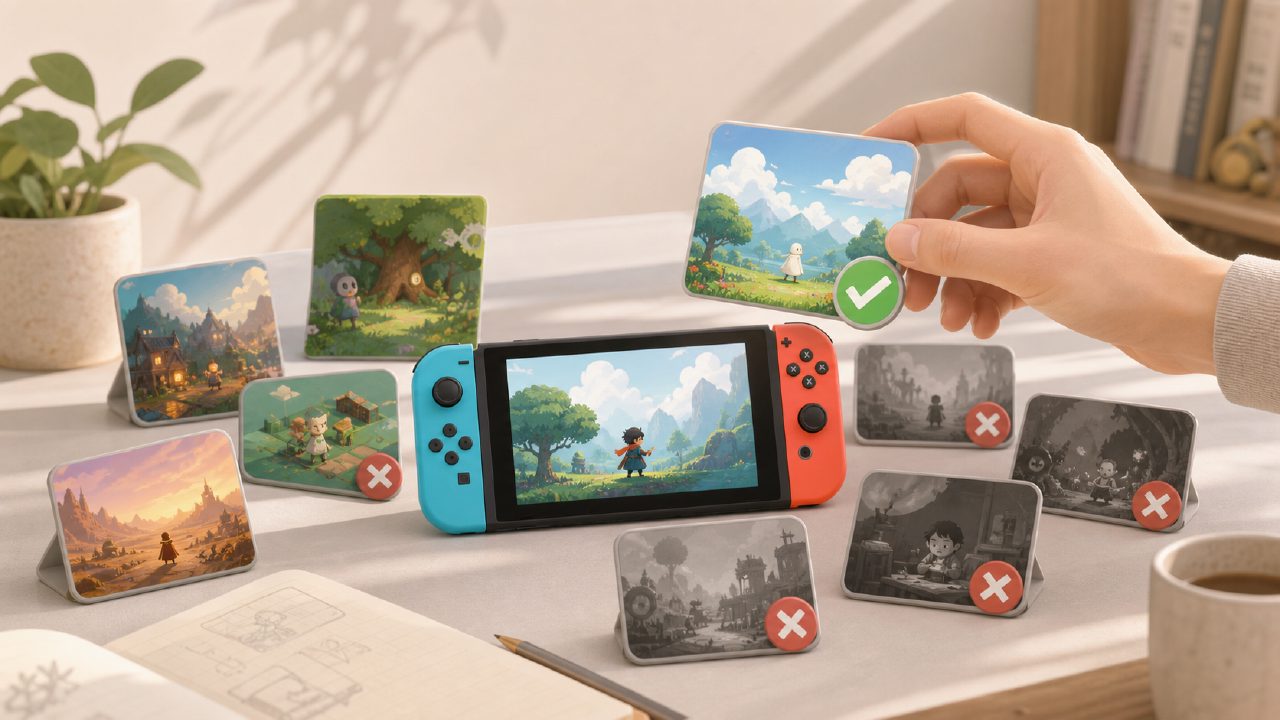
After playing the Switch for a while, you start to realize that while official blockbusters are stunning, their price tags of 200–300 yuan often lead to them gathering dust after you finish them. That's when many people think about switching things up and digging into indie games that are small in size but amazing in gameplay. The problem is, the eShop has a huge number of indie games, and just looking at icons and promotional images doesn't tell you which ones are truly worth your time.
This article is here to save you the effort of filtering. I've compiled a checklist of key points, offering practical selection directions based on different types and scenarios, each with specific criteria for judgment.
1. Don't want to overthink, just relax? Look for "gameplay-driven" indie games
Many indie games have a core mechanic that keeps you hooked. For example, the fast-paced roguelike hack-and-slash of Hades, or the relaxing farming rhythm of Stardew Valley — the polish of the core gameplay is often even more solid than some AAA titles.
How to tell if it's your cup of tea: See if it has a core loop (e.g., collect resources → upgrade → challenge → collect again). If it does, you can usually play for dozens of hours without getting bored. This type of game is a great first choice for your daily indie game recommendations, because it has high fault tolerance and you can pick it up for a round anytime.
2. Want to play with someone on the weekend? Look for the "co-op" tag
One of the best scenarios for the Switch is two people sitting on the couch playing together. Many indie games are designed for two players from the ground up, and they emphasize cooperation and coordination more than traditional big-budget games. For example, the Overcooked series — it's a chaotic, hilarious mess. And It Takes Two, an adventure specifically designed for two players (though published by EA, its gameplay philosophy is very indie).
A practical tip: If your partner or friend isn't a hardcore gamer, prioritize two-player Switch games that are "simple to control but fun in mechanics," like Snipperclips or Unravel Two. These games don't require high skill levels — they have a low barrier to entry and are actually more fun.
3. Value story and artistry? Focus on "narrative-driven" works
Indie games often push boundaries in storytelling and art style more than commercial blockbusters. If you enjoy stories that linger long after you finish, like the immersion of The Last of Us, but want to try a more personal expression, check out Celeste, Undertale, or Disco Elysium. The art, music, and scripts of these games are frequently featured in the indie game categories of major game rankings.
Pitfall reminder: Narrative-driven indie games are usually slower-paced and may involve long stretches of reading. If you typically prefer instant action and satisfying feedback, these might not suit you. It's best to watch a few minutes of gameplay footage before deciding.
4. Want to discover hidden gems? Get into the habit of browsing "game compendiums"
Many great indie games never appear on the front-page recommendations. If you only check the eShop's "best sellers" list, you'll miss a lot of high-quality works with limited marketing budgets. Regularly browse community-made game compendiums, or go directly to player communities like Xingba and read through discussion threads.
How to find them specifically: First, decide on your preferred gameplay type (platformer, tactical RPG, space exploration, etc.), then search for "indie game compendium" under that genre. Many veteran players compile charts ranked by difficulty, playtime, and value for money — much more efficient than wandering around the store on your own.
5. On a budget and want value? Look for affordable alternatives in "Nintendo game recommendations"
Indie games typically cost between a few dozen to just over a hundred yuan, much cheaper than first-party titles, but not necessarily lower in quality. Many big games in Nintendo game recommendations have solid indie alternatives. For example, if you like the open-world puzzles of The Legend of Zelda, try Tunic; if you enjoy the laid-back management of Animal Crossing, try Ooblets.
How to judge value: Look at the average completion time and replayability. A 70-yuan indie game that gives you 30+ hours of experience offers incredible value. Also, in Xingba's Switch game recommendations section, players often share actual playtime, pros and cons — checking it before buying can effectively prevent overpaying or making a wrong choice.
Ultimately, the most attractive thing about indie games is the surprise of "low cost but fresh ideas." If you're stuck in a "don't know what to play" phase, just pick a direction from the lines above and give it a try. Start with a game that has stable reviews and a gameplay style you like — it's much more practical than looking at a bunch of rankings covers. Once you dive in, you'll find that compared to big-budget titles, indie games often make you truly remember the joy of "playing" itself.
Comments
Leave a Comment