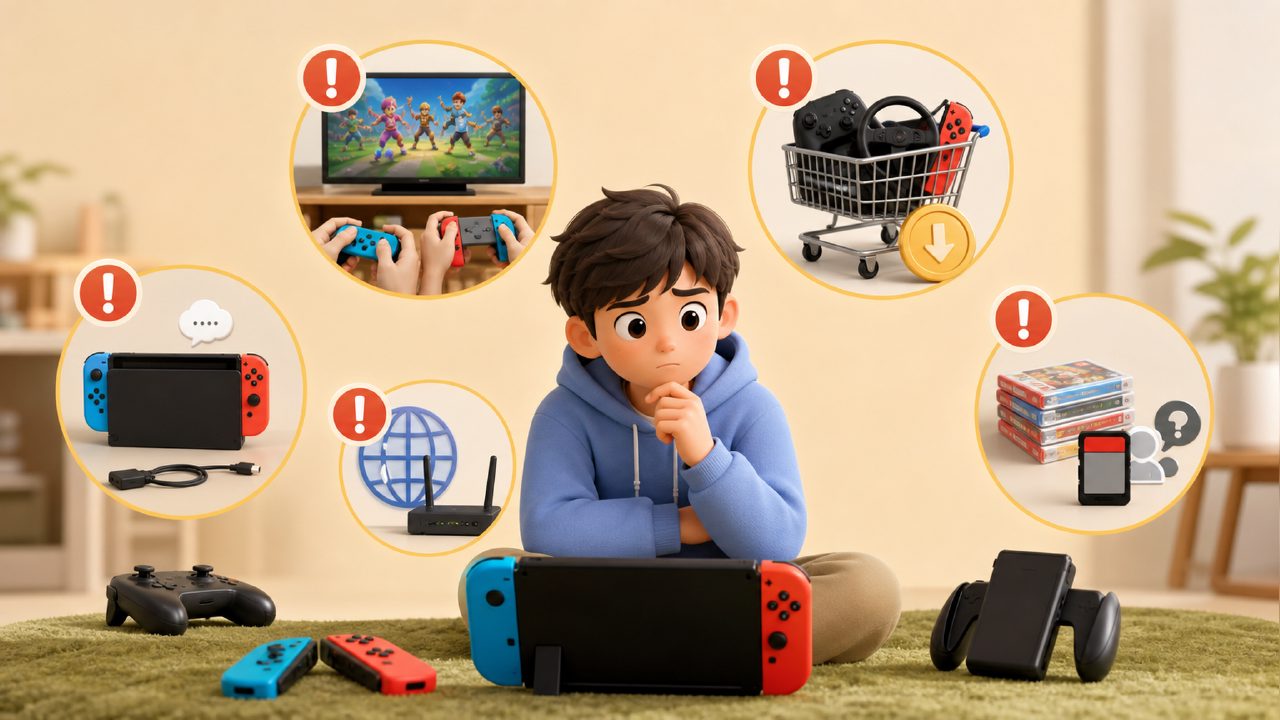
What's the point of buying a Switch? A big reason is being able to play together. But many people get the console, buy the games, and end up letting it collect dust. The reason isn't that the games are bad — it's that they stepped right into the traps.
This article won't waste words. It'll just talk about a few Multiplayer pitfalls that trip people up most often. If you're planning to bring someone into the fold, or just bought a console and want to play with others, reading this could save you a few hundred bucks at least.
Thinking "Multiplayer" = "Online Play"? Then You Hit the Membership Wall
This is the most common rookie mistake. Many people think they can buy Splatoon 3 or Mario Kart 8 and jump straight into online matches. But when they open the game, the system prompts them for Nintendo Switch Online. The console is a friend's, the membership isn't active, and the mood instantly dies.
Most major first-party Nintendo titles require a paid membership for online multiplayer. If you just want to play a few rounds with friends occasionally, don't rush into an annual subscription yet. Xingba offers a family membership sharing service, which costs just a few dozen bucks per person — much cheaper than an individual yearly plan, and you won't feel like you've wasted money on "just one session."
Another easily overlooked point: Some games support online multiplayer, but local co-op doesn't need a membership at all. For example, the Overcooked series lets two people play directly with a pair of Joy-Cons, no internet required. So before buying a game, figure out which kind of Multiplayer you want.
Two-Player Games ≠ Playable for Everyone
"Just buy a two-player Switch game—easy, right?" That sounds fine, but the failure rate is high. Many two-player games have a learning curve. Games like Cuphead and Biped are extremely unfriendly to casual or less skilled players. You're all excited, but your partner has been crushed three times already, and they'll likely just throw down the controller and walk away.
An even trickier trap: Some games claim to be "co-op," but actually require one player to carry the other. For example, in Kirby and the Forgotten Land's co-op mode, if one player gets stuck, the other can only wait around. What really works for everyone are games with a slower pace and simple rules, like Mario Party. If you're not sure what to buy, check the game rankings for popularity — seeing what people are actually playing is far more reliable than blind picking.
Buying Digital Copies Only to Find Out You Can't "Share" Them
Many people buy digital copies from the eShop for convenience. After buying, they tell a friend, "Just download it when you get home," only to find the friend has no access. This comes from unfamiliarity with Nintendo's account system.
"Sharing" a digital game doesn't mean buying one copy for two people to play. You need to set a primary console. One Switch can let up to two accounts share a game library, but it's a bit cumbersome to set up. If you and a friend both want to play the same game, splitting the cost through a shared purchase is actually easier. Xingba's digital game buying service does exactly that — no need to mess with primary/secondary console unbinding; just hop on board.
Another trap: Many excellent indie game recommendations for multiplayer, like Hi-Fi Rush or Just Dance, go on sale for just a few dozen bucks. But sale info only pops up during specific periods. Often you buy at full price, and the next month it's on sale — you've paid double for nothing. It's wise to check recent discount records before buying.
Thinking the More You Buy, the More You Play
This is another common illusion. Many people start by buying a dozen multiplayer games, only to end up playing Super Smash Bros. Ultimate and Mario Kart 8 Deluxe the most. They never even open the other games' icons.
The reason: Multiplayer games demand a lot from your play partners. You buy Overcooked! All You Can Eat, but your friend only plays Animal Crossing: New Horizons — that game was a waste. The reality is that most people only have a limited amount of time to play together regularly. Sticking to one or two games actually brings more joy. Instead of piling up game titles, first confirm what kind of games the people you play with enjoy.
If you need a quick overview of what others are playing, check the game encyclopedia for reviews and playtime data. It helps filter out games that look fun but nobody actually plays.
Final Trap-Avoidance Checklist
To sum it all up, the core points are these:
- First confirm whether the game is local co-op or online multiplayer, then decide if you need a membership.
- Two-player games vary in difficulty — don't buy one only to find out only one person has fun.
- Digital "sharing" isn't buy-one-get-one-free; understand the rules before you purchase.
- Buy less and play more — it's better to master one game than to own dozens.
If you're new and don't know where to start, the Switch game recommendations and Nintendo game recommendations sections on Xingba are full of real player feedback — far more useful than any ad copy. The first step to avoiding traps is to stop watching ads and see what the people you care about are actually playing.
Comments
Leave a Comment