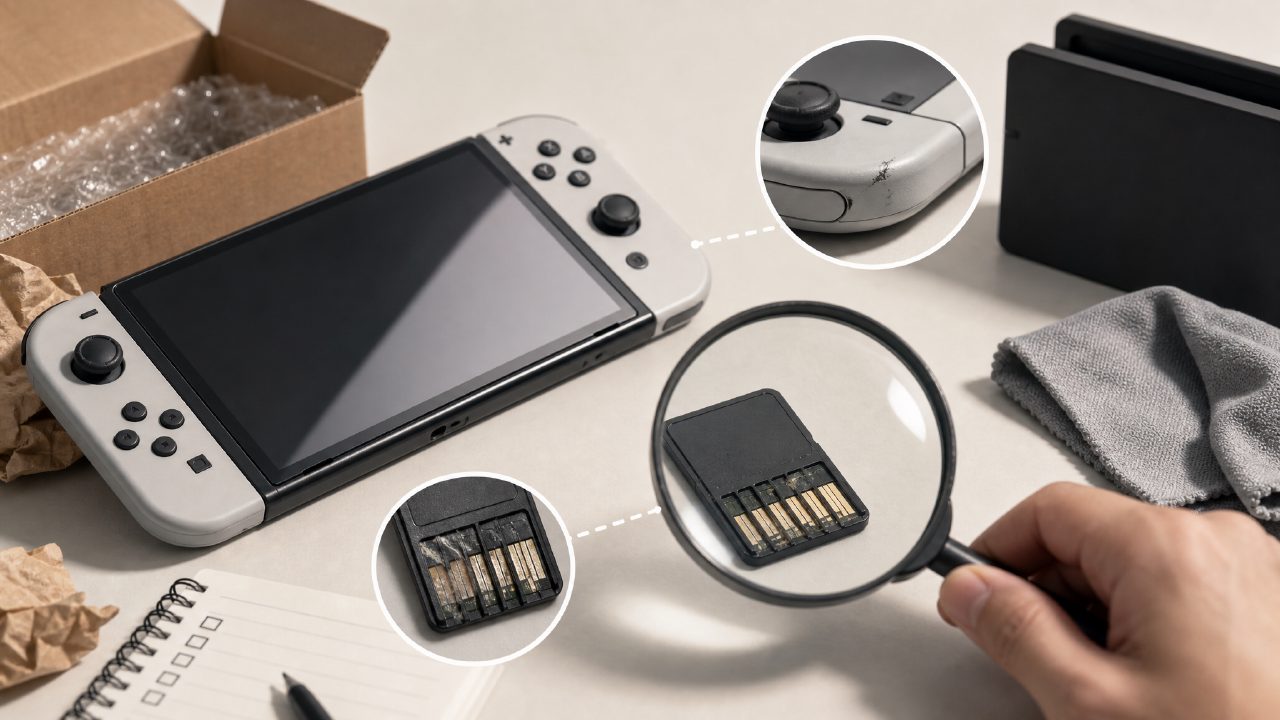
Second-hand trading is almost unavoidable in the Switch gaming community. Whether you're selling old cartridges to fund new games, trading in a dusty console for an OLED model, or swapping out drifting Joy-Cons for a new pair, the idea of a "Trade-In" is always on your mind.
The concept sounds great, but in practice, there are plenty of pitfalls. Many people see prices listed on Xianyu and think it's easy, only to realize it's not that simple when they try to sell. This article isn't about analyzing the second-hand market; it's just about the most common mistakes that can trip you up.
Where You Lose the Most Money When Selling Cartridges
Under many Switch game recommendations, people ask whether a game is easy to resell. Cartridges are indeed one of the most value-retaining physical game media, but only if you choose wisely.
The biggest trap is buying into hype. When a game first launches, the hype is explosive, and second-hand prices are inflated. You buy a Japanese version cartridge for 350, and after finishing it, you find the price has dropped to 220. It's not that the game is bad; it's that market enthusiasm fades too quickly. Conversely, first-party titles like Nintendo game recommendations such as Zelda and Mario series hold their value well, and you'll get inquiries within a few days of listing.
Another easily overlooked point: the price difference between a cartridge with its original case and one without is significant—having the complete box and manuals can fetch tens more. Many people toss the case in a corner or even throw it away after buying, only to realize the loss when selling. Additionally, two-player Switch games are often harder to resell than single-player titles, as the target audience is usually couples or friends who need to find a partner first, resulting in lower liquidity.
Think About These Things Before Selling a Console
Trade-In pitfalls for consoles are even more numerous than for cartridges. Many people think, "I've kept my device in great condition, it's 80% new," only to have the buyer nitpick every flaw.
First, screen scratches. The Switch's plastic screen is prone to fine scratches that are invisible under normal lighting but become glaring when photographed outdoors in daylight. You think it's 90% new; the buyer sees it as battle-worn. Second, the difference between battery life versions. The old Switch and the new battery life model look almost identical, but the second-hand price difference is around 300-400 RMB. If you try to pass off an old model as a new one, you'll be blacklisted when caught.
Third, and most overlooked: account unbinding. If you don't unlink your primary account and factory reset the console before selling, the buyer may not be able to use your digital games, but more critically, your account info remains on that device. Many buyers and sellers fail to realize this, leading to disputes that are hard to resolve.
Is It Worth Fixing Joy-Con's "Minor Ailments"?
Joy-Con drift is an interesting topic in the second-hand market. If you have a drifting Joy-Con, selling it as-is will get you a rock-bottom price. But after repairing, you can recover a significant amount of value.
However, there's a common misconception. Many people think, "I sprayed some WD-40 to clean it, and it's fine now." The problem is that this fix only lasts a week or two, and drift is likely to return. The reliable solution is replacing the joystick module, which is inexpensive but requires some handy skills. If you're not confident in your abilities, it's better to list it as "with drift, sold as parts"—that's more likely to result in a sale than selling a half-fixed item.
For buyers, buying second-hand Joy-Cons requires a sharp eye. Suspiciously cheap ones often have hidden issues like Bluetooth connection failures or charging contact problems—these are "working with illnesses." Unless you're really strapped for cash, ask the seller to record a video testing every button and motion control before buying a used controller.
Where to Find Reliable Image Galleries and Reference Prices
Before trading, most people look up indie game recommendations or game rankings to gauge popularity, but what really determines price is supply and demand. The same game may have different prices between Japanese and US versions, and even Hong Kong version cartridge numbers can affect second-hand circulation. If you're unsure, check a game image gallery to compare version info—at least you won't accidentally sell a limited edition as a regular one.
Trade-In, at its core, is a game of information asymmetry. Know the true condition of your item, understand what buyers care about, and avoid the pitfalls above, and you won't get burned. Don't impulsively set a high price, and don't let a few words push you down to a rock-bottom price. Stay sharp, and every pitfall you avoid is a win.
Comments
Leave a Comment