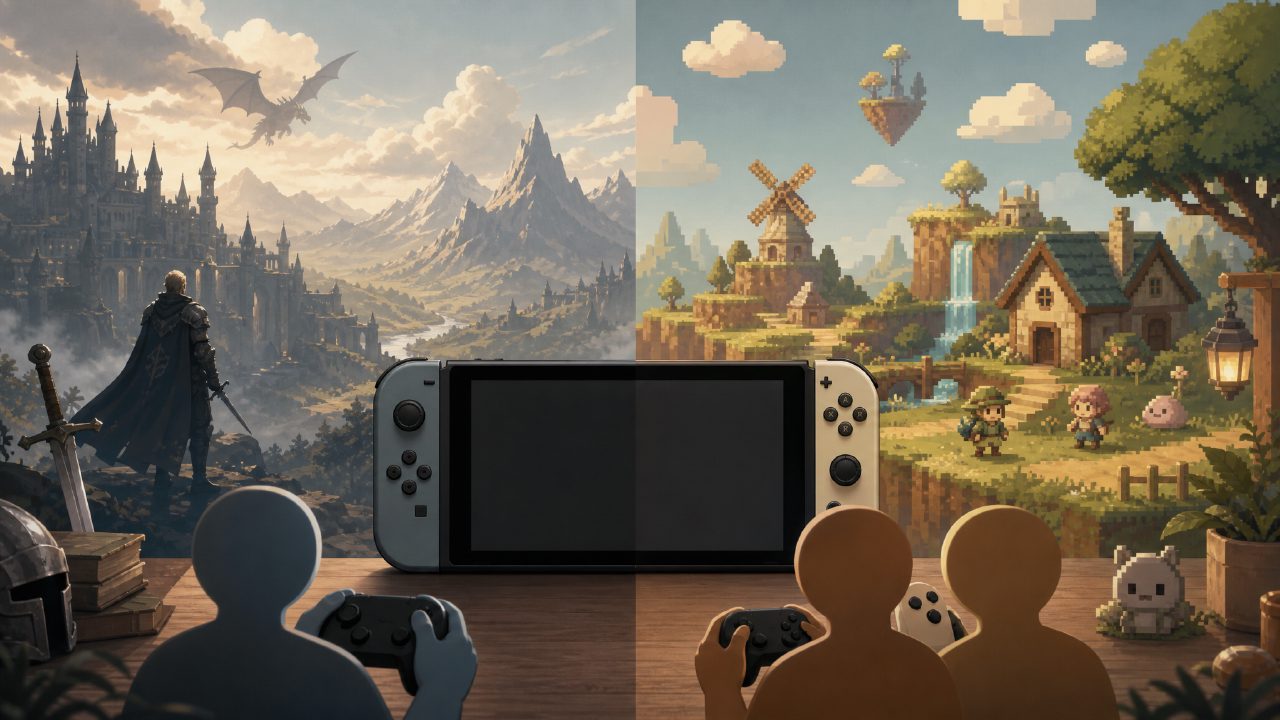
Many people encounter the same confusion when first trying RPGs on the Switch: with so many games, which one is really for you?
This isn't your fault. The RPG genre itself is huge—Japanese, American, turn-based, real-time combat, open world, linear story… just categorizing them can be dizzying. Not to mention that there are so many great RPGs on the Switch, but your wallet and time are limited.
So today, let's skip the fluff and directly compare a few representative RPGs to help you quickly determine which direction is worth investing in.
AAA RPGs vs. Indie RPGs — Completely Different Gameplay Experiences
When many people think of RPGs, they immediately think of titles like The Legend of Zelda: Breath of the Wild or Xenoblade Chronicles. Yes, they are benchmarks, but they also have a high barrier—often requiring hundreds of hours of commitment, and not everyone has the energy to tackle that.
In contrast, indie games with RPG elements like Stardew Valley or Hollow Knight are actually better suited for fragmented playtime. A 20-minute session can still make progress, with no psychological burden.
Here's a practical trade-off: if you can consistently play for over an hour a day, then go ahead and invest in an AAA RPG—the immersion is truly unmatched. But if your gaming time is often interrupted, or if you're playing other genres simultaneously, then indie game recommendations are full of hidden gems—higher cost-effectiveness and much less pressure to play.
For example, Octopath Traveler combines pixel art with epic storytelling beautifully, retaining the refined feel of an indie game while delivering solid JRPG content. These in-between works are actually a great fit for the Switch's positioning.
Single-Player RPGs vs. Two-Player RPGs — Social Dynamics Determine the Experience
Many people think RPGs are all about grinding alone. But there are actually quite a few RPGs on the Switch that support two-player, and the experience is completely different.
Games like Diablo 3 or Divinity: Original Sin 2 require good rhythm when playing cooperatively. If one person rushes in while the other wants to strategize, things can easily go wrong. But if you and your partner have good synergy, the sense of achievement from tackling bosses and advancing the story together is something single-player can never provide.
If you're looking for RPGs among two-player Switch games, first make sure the other person is also open to this type of long-term commitment. Otherwise, they might get tired after half an hour, which is worse than not starting at all.
Conversely, if you enjoy playing at your own pace and prefer slowly exploring the story without waiting for coordination with others, then single-player RPGs are more suitable. Thinking through this difference from the start can save you a lot of trial and error when choosing games.
How to Quickly Find the Right RPG for You?
If you don't want to browse through reviews and gameplay videos one by one, the most straightforward way is to look at game rankings and game catalogs. The former tells you which games have the best reputations, while the latter helps you filter by type, avoiding misleading cover art and trailers.
For example, if you're a story-focused player, focus on titles like Xenoblade Chronicles 3 or Shin Megami Tensei V, which excel in narrative. If you value combat intensity more, then Monster Hunter Rise or Triangle Strategy, which lean toward strategic pacing, might be a better fit.
Also, don't fall for the idea that you "must play a certain game." Preferences among RPG players vary widely; a game someone raves about might end up collecting dust on your shelf. Try popular RPGs from Nintendo game recommendations via secondhand copies or digital sales first—it's much cheaper that way.
Ultimately, RPGs are the genre most sensitive to "timing." Buying the same game during a busy work period versus during a vacation yields completely different experiences. I've seen many people jump on a critically acclaimed title, only to abandon it before even leaving the first village because they didn't have time.
A Few Worthwhile Horizontal Criteria
Finally, here are some practical judgment criteria to help you quickly filter:
- Game length: Under 40 hours is light, over 100 hours is deep—choose based on your free time
- Language support: Some Japanese RPGs get Chinese translations late, so if you're eager to play, you may need to tackle the original language
- Save friendliness: Whether you can save anytime and if there's auto-save—important for players with fragmented time
Also, many great games actually come from the indie category. Browse the dedicated sections of Switch game recommendations; you'll find many lesser-known but content-rich titles at friendly prices.
In short, there's no standard answer for choosing an RPG, but understanding your own time and social preferences can save you a lot of detours. Don't be held hostage by the word "masterpiece"; the best game is the one that fits your current rhythm.
Comments
Leave a Comment