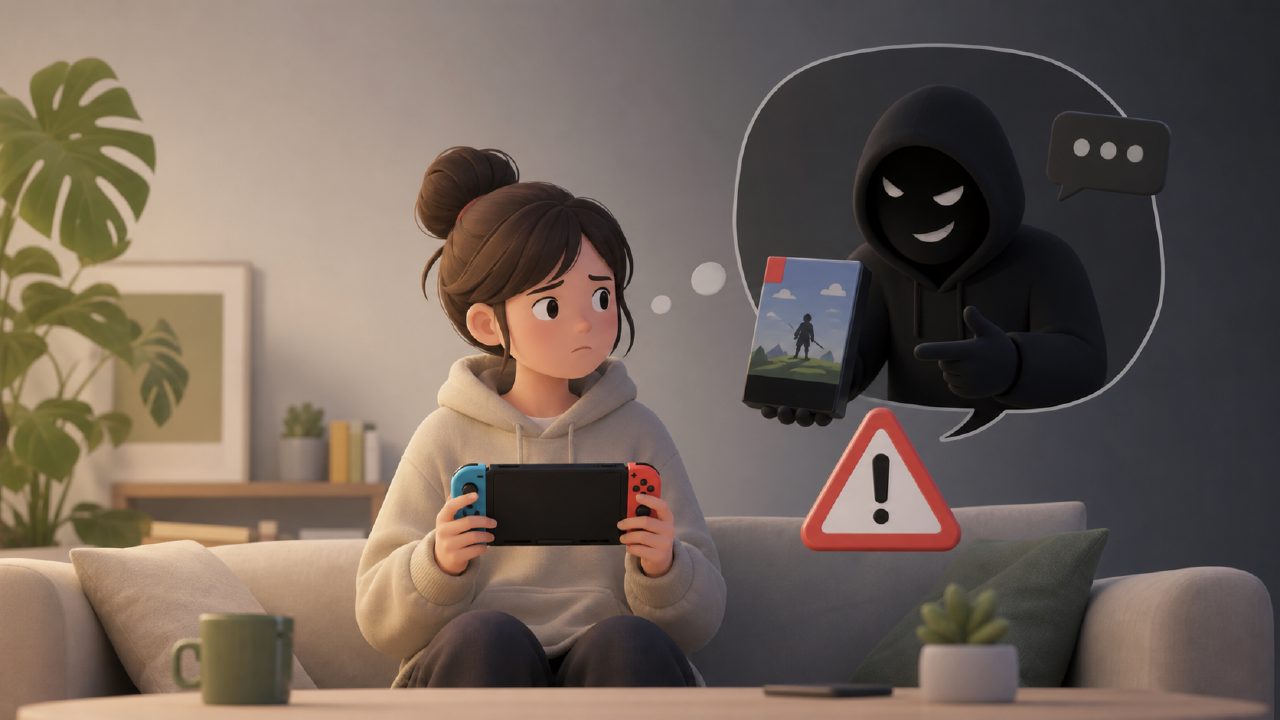
Many Switch players, after buying the console, immediately look for communities and groups to join. They think the groups have many experts, fast news, and they can save money by sharing costs. But in reality, after joining, more people fall into pitfalls than find bargains.
I've joined over a dozen Switch-related player groups, forums, and communities, and found that many problems are actually consistent. This article today specifically discusses these common pitfalls, and also naturally includes keywords you'll definitely use like Switch game recommendations and Nintendo game recommendations, so that you can save some effort when looking for guides or people to play with in the future.
Don't expect strangers to give you reliable "Switch game recommendations"
Many newcomers' first question in the community is "Any good game recommendations?" Then there's a bunch of replies, looking lively, but actually there are many hidden pitfalls.
The most common situation is: a few active veteran players in the group always recommend the one or two games they just bought and haven't gotten tired of, or games that have been hyped on Bilibili recently. Their understanding of the game may not be deeper than your own from watching videos. More problematic is that some are second-hand cartridge dealers; what they recommend depends on which cartridges they have in stock that are not selling well.
So even when asking for Nintendo game recommendations in the community, it's advisable to ask multiple people for their reasons, like "Have you finished this game?" "What's fun about it?" Those willing to go into details are usually reliable; those who just reply "Masterpiece, just buy it blindly" — you'd better question them.
Finding a partner to play "two-player Switch games" — first figure out their playstyle
Many people join communities specifically to find others to play with. Wanting to play two-player Switch games or needing to share a family membership is a common motivation. But there's a very easy point of failure: what you think "playing together" means might be completely different from what the other person understands.
For example, you find someone to play Mario Kart online, but the other person quits after half an hour, saying "just playing casually." If you've practiced seriously, you'll definitely feel annoyed. Conversely, some people call it "looking for teammates," but actually they just need someone to fill a spot to unlock achievements. If you make a mistake in the first round, they call you bad and never team up with you again.
What's a better approach? After joining the community, observe for a few days. If you see someone consistently calling for the same game and willing to schedule fixed times to play, that's a real player. Those who call for Splatoon today and Monster Hunter tomorrow are probably just asking casually — don't take them too seriously.
So-called "indie game recommendations" hide many unfinished products
There's a type of person in the community who especially likes to recommend indie game recommendations. They feel recommending AAA games is too mainstream; they need to recommend something niche to show taste. But the lower limit of indie games is very low, really. Some games have good reputations on Steam, but after being ported to Switch, they have frame drops, crashes, or even save data loss — and no one in the community mentions it.
The most absurd thing I encountered was seeing someone in the group say that a certain indie game "runs perfectly on Switch." After I bought it, the first scene in the game was as choppy as a slideshow. Later, I searched on Google and saw that the game had already been criticized by foreign players for several rounds on Switch, but the person promoting it in the domestic community might have just watched a video and reposted it.
So when you see any indie game you haven't heard of in the community, don't rush to buy it. First go to game databases or specialized review sites to check its Switch version performance, especially frame rate and loading times. Most people in the community play physical cartridges or digital versions and won't specifically test performance. When they say "smooth," it might just be that they aren't sensitive to it.
How to use "game rankings" and "game databases" without going astray
All large-scale communities have game rankings. Some are automatically calculated by the official system based on popularity, others are user votes. Regardless of the type, don't treat them as the only standard.
For example, a game might stay on the rankings for three months, not because it's really fun, but because its core fanbase keeps voting. Conversely, some niche but high-quality games might not even make the list. Especially indie games and some obscure types of Japanese games are almost invisible in community rankings.
A more reliable approach is: first browse through game databases, filter by type to find what interests you, then search for discussion threads about that game in the community. Look at reviews from real players who have played for over 20 hours. Posts like "Just bought it, showing off" have no reference value. You need to look at long posts with over 500 words, including screenshots, and even complaints about control issues.
At the end of the day, the community is a tool, not an authority
The biggest value of joining a community is actually solving problems you can't handle alone. For example, sharing a family membership, finding a second-hand trading channel for rare cartridges, or confirming the online status of a certain game. In these matters, the community can save a lot of time.
But when it comes to subjective judgments like which game to buy, how to play, or whether it's worth it, most opinions in the community can only be used for reference, not as answers. Your own time, your taste, your preferred pace — only you will know after trying. I've seen too many people buy a bunch of games they don't play just because the community led them.
Treat Switch game recommendations and Nintendo game recommendations as indexes, use real player reviews from the community as aids, and at the same time learn to cross-verify using game databases and rankings yourself. That is the way to avoid falling into pitfalls.
Comments
Leave a Comment