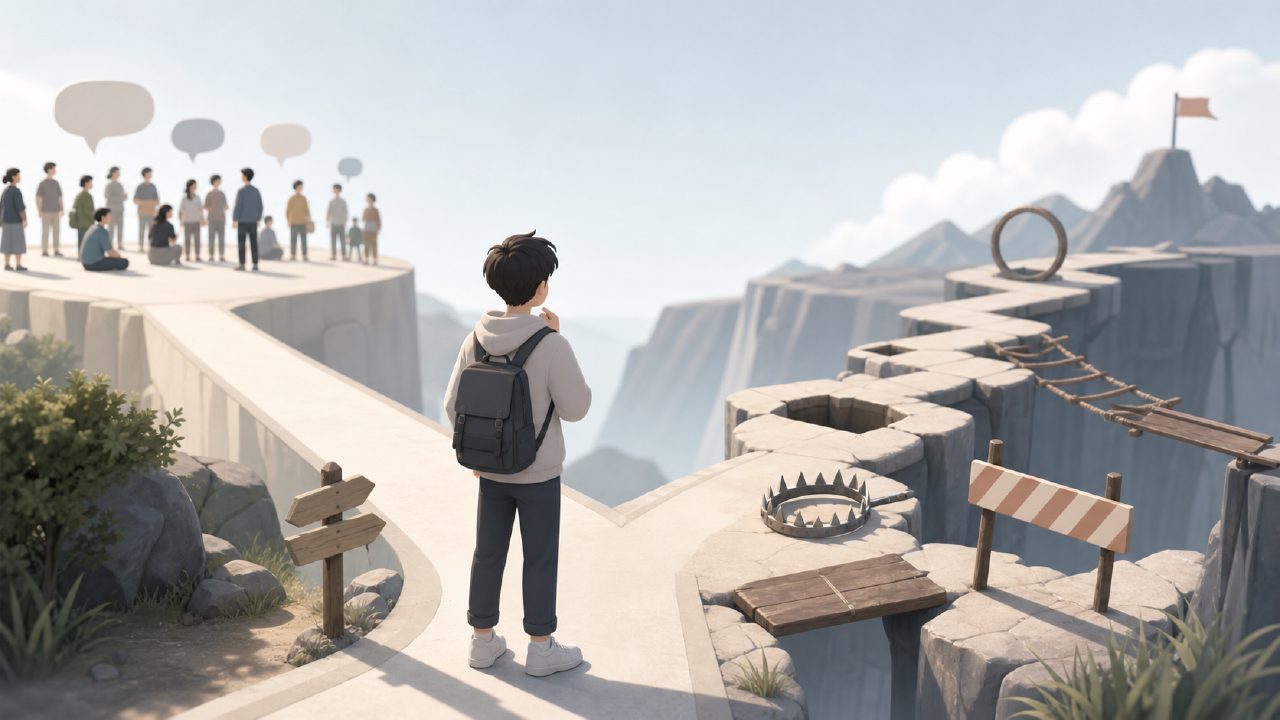
Just got a Switch, happily plugged in a game card, played for two days and realized—no one to play with, your friends are still纠结 which version to buy, and the game you wanted to buy turned out not to your taste. Then you start searching for various Switch communities, hoping to find someone to play with, ask for recommendations, or join a family membership plan. Good intentions, but plenty of traps.
As someone who has spent some time in several Switch communities, honestly, many newcomers don't get carried forward—they get misled. Today, using a player community like Xingba as an example, let's talk about where you're likely to stumble and how to avoid it.
Family Membership Carpooling: The Easiest Trap to Fall Into
Many communities' core service is helping players pool for Nintendo family memberships. It's cheap—just a few dozen bucks a year to get on board. But the problem is: is the car owner reliable?
Some owners disappear after a few days, others kick you out to recruit new people, and some change the account password without telling you. Don't think this is rare—I've seen more than one post saying, 'The owner deleted me as a friend, lost the membership and can't get my money back.'
My personal advice: Don't jump on board just because it's cheap. At least check whether the community has an owner verification mechanism or a track record you can look up. Communities like Xingba, which are maintained by someone, tend to be more stable than those temporary group chats. But even so, if you can pool with friends, don't go for strangers—saving a few dozen bucks isn't worth the hassle.
Don't Fully Trust Game Recommendations, Especially Hype About 'Masterpieces'
The most common posts in communities are 'Game X is the best, must-play, you'll regret not playing.' You click on Switch game recommendations or Nintendo game recommendation tags, and nine times out of ten you'll see The Legend of Zelda, Super Mario Odyssey, etc. They're great, but the problem is—these recommendations may not suit you.
Here's a real example: Someone hyped up Xenoblade Chronicles 2 to the skies, and a friend bought it, played for two hours, found the pace too slow, and it gathered dust. It's not that the game is bad—it's that he just doesn't like slow-burn JRPGs. The people recommending in communities are mostly fans, and what they say is naturally biased.
My approach: Browse the game catalog, check the genre, gameplay, and playtime, then search for actual flaws mentioned by people who've played it. Don't just look at high scores; posts complaining about 'what's wrong with this game' are often more helpful.
Multiplayer and Co-op Games: Confirm Your Friends Have Them First
Many posts recommending two-player Switch games are well-written—Overcooked, Mario Party, Mario Kart—all seem fun. But the problem is: did your friend buy it?
Someone excitedly bought Mario Kart and then looked for people to play with in the community. Turns out the other person didn't have the game and had to wait for a sale. The whole evening was spent discussing whether to buy it, never actually playing. This is very common.
If you want to play online with friends, make sure beforehand whether they already have the game or if you're both planning to buy it. Don't buy it yourself and then ask 'Anyone want to play together?'—chances are you'll wait for hours with no response. Some communities' carpooling or shared account services can also solve this: a few people chip in for a digital copy, costing less than each buying a separate game card.
Indie Game Recommendations: Beware of Niche Filter Bias
There's a type of person in communities who loves recommending indie games like Hollow Knight, Hades, Stardew Valley—all genuinely great works. But some obscure indie games are hyped to the heavens even though they have rough graphics, awkward controls, and are only popular because of a unique theme.
I saw someone in a community recommend a pixel-art platformer, saying 'smooth controls, moderate difficulty.' Someone actually bought it, played for half an hour, and threw their controller in frustration—jump detection was weird, and save points were far apart. That's typical 'niche filter bias': the creator thinks it's great, the fans think it's great, but a normal person just suffers.
Before buying an indie game, check the game rankings and see what players have said—especially posts mentioning 'not for beginners' or 'difficulty will put you off.' That's more reliable than guessing. Communities like Xingba sometimes have curated, balanced indie game recommendations—pick those with detailed reviews.
Some 'Veteran' Advice in Communities May Not Suit You
When you're new and ask 'Which console should I buy?' someone tells you 'The OLED model isn't necessary, the standard battery version is best.' You believe them, only to find out the OLED screen looks much better in handheld mode, and you regret it. The advice itself isn't wrong—but it's based on their own usage habits. They might mainly play on a TV, while you spend most of your time playing on the subway.
Others say 'Don't buy digital, physical cards let you resell.' But if you don't want the hassle of reselling, or you often switch between games, digital is actually more convenient. You need to consider your own situation, not just copy others' experiences.
Should You Join This Community? Ask Yourself These Questions
Before deciding to dive deep into a community, take a moment to think:
- Are you just looking for a reliable carpooling channel, or do you want to chat and play long-term?
- Do you need game recommendations more, or a cheap second-hand/shared-account platform?
- Are you willing to participate in discussions, or just lurk?
Each community has a different focus. Some prioritize Switch game recommendations and game catalog organization—good for finding information. Others have mature carpooling/shared-account services. Some are purely for chatting and hanging out. Pick the wrong type, and you'll feel out of place.
In short, whether a community is good doesn't depend on how many members it has, but whether it can solve your current problem. If you just want to find someone to share a membership, focus only on that feature and don't get distracted by various event posts. If you're looking for gaming buddies, first match your schedules—don't end up with 'I bought the game, but the other person says they're too busy with work to play.'
Comments
Leave a Comment