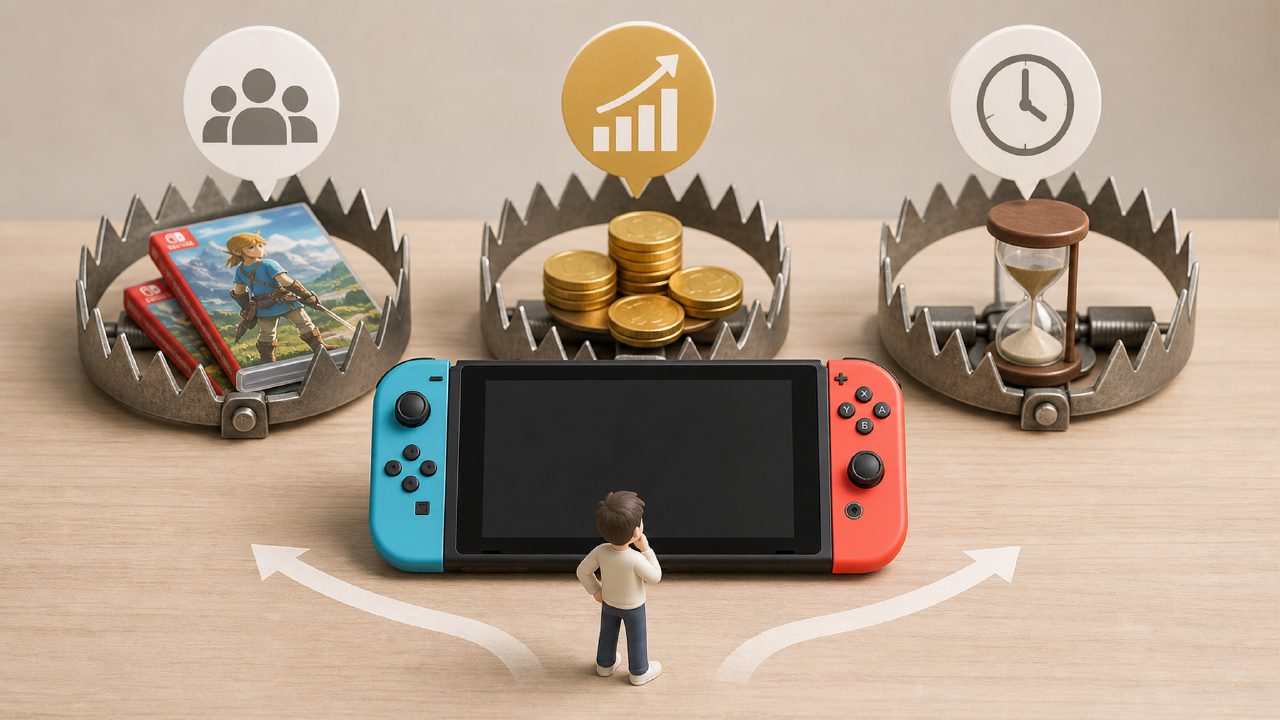
Browsing rankings to pick Switch games is a common practice for many. But to be honest, the odds of falling into a trap are quite high. I've seen countless people buy a bunch of highly rated games based on game rankings, only to end up with a high rate of them gathering dust. Where's the problem? The rankings themselves aren't wrong, but the list you're looking at probably doesn't match your needs at all.
Let's first talk about the most common pitfall: many of the high-scoring games on game rankings aren't actually suitable for you. For example, The Legend of Zelda: Breath of the Wild tops the charts year-round, but if you only have fragmented time and can play just 20 minutes a day, this game will feel exhausting. Its immersion relies heavily on exploration and memory; playing in short bursts makes it easy to forget where to go next. A similar situation is especially common in Nintendo game recommendations lists — Nintendo's first-party titles generally score high, but slow-burning RPGs like the Xenoblade Chronicles series are tough for players without patience for story and combat systems to get through the first 10 hours.
Another issue easily overlooked: rankings usually don't differentiate between single-player and multiplayer. You search for two-player Switch games in the rankings, only to find that seven of the top ten are single-player blockbusters. If you trust the ranking and buy them, you'll end up taking turns playing alone. The right approach is to look for lists specifically tagged "two-player," "party," or "co-op" within the Switch game recommendations category, rather than staring at the overall chart. The overall chart ranks based on overall scores and sales, which has nothing to do with whether you want to play with another person.
Ranking Traps for Hardware Accessories: The Joy-Con and Dock Pitfalls
It's not just games that have rankings; accessories like Joy-Con and Dock are also "rated" by various lists. But accessory rankings are even less reliable than game rankings — many lists rank based on sales volume or price, not actual experience.
Take Joy-Con for example. In third-party controller rankings, products costing just a few dozen yuan often top the list. Once you buy and use them, the joystick drift kicks in faster than the original, HD rumble is completely missing, and motion controls frequently disconnect. If you try to use such a controller as a second controller for two-player Switch games, the experience will directly drag down the fun of the whole session. Instead, the third-party Joy-Con priced around a hundred yuan, which rank in the middle of the list, offer a better balance of build quality and stability — they just don't sell as well, so they get pushed down.
The situation with Docks is even more exaggerated. Many people buy third-party docks or mini Docks for convenience, but the rankings of these products have nothing to do with safety. Some of the best-selling mini docks don't follow the Switch standard for charging protocols, and long-term use can burn out the charging chip on the motherboard. Two of my friends have already had their OLED consoles become unresponsive after using unofficial Docks. The comment sections for these top-ranked products are full of good reviews, because most users haven't yet reflected the proportion that run into problems after a couple of months — by the time issues appear, the return period is long gone.
How to Determine Whether a Ranking Is Trustworthy
The key to avoiding pitfalls is not to give up on rankings, but to understand the logic behind them.
First, look at the source of the list. If it's a game ranking generated by user votes, the reference value is higher, but you also need to consider the composition of the voting crowd. A list voted on by a hardcore gaming community might have the top ten filled with Souls-like or Roguelike games, which is meaningless for casual players. If it's an editor's recommendation or a media score aggregate, you need to see whether that media's preferences align with your taste. If you usually enjoy indie game recommendations, looking up IGN's Game of the Year list isn't quite right — they naturally lean toward big-budget productions.
Second, check whether the ranking is based on "overall score" or "specific scenario score." For example, on game encyclopedia type websites, each game has scores across multiple dimensions: story, graphics, difficulty, single-player experience, multiplayer experience. If you're looking for two-player same-screen play, you should only look at that dimension, not the composite score. A game with an overall score of 80 but a multiplayer score of only 60 is a minefield for you.
Third, pay attention to the timeliness of the ranking. Some rankings haven't been updated for years. For instance, a 2020 list might still have Animal Crossing: New Horizons in the top three, but Super Mario Bros. Wonder, released in 2024, isn't even on the list. Using such a list to pick games means you've missed out on almost all great releases from the past two years.
Practical Advice for Most People
If you don't want to spend too much time researching, the simplest approach is: find two or three reliable players or small communities you trust, and see what they recommend. In Switch player communities like Xingba, real Switch game recommendations often fit ordinary people's actual situations better than rankings, because people there will tell you "the first four hours of this game are boring, but if you push through, it's a masterpiece" or "this party game ranked third is really only fun when you've had a few drinks."
Rankings are a tool, not an answer. Look at lists with your specific needs in mind, treat those key phrases — Nintendo game recommendations, two-player Switch games, indie game recommendations — as filters rather than conclusions, and your chances of buying the wrong game will drop significantly. As for hardware like Joy-Con and Dock, either buy official ones, or only buy third-party products that carry the official Switch license — regardless of where they rank on any list.
Comments
Leave a Comment