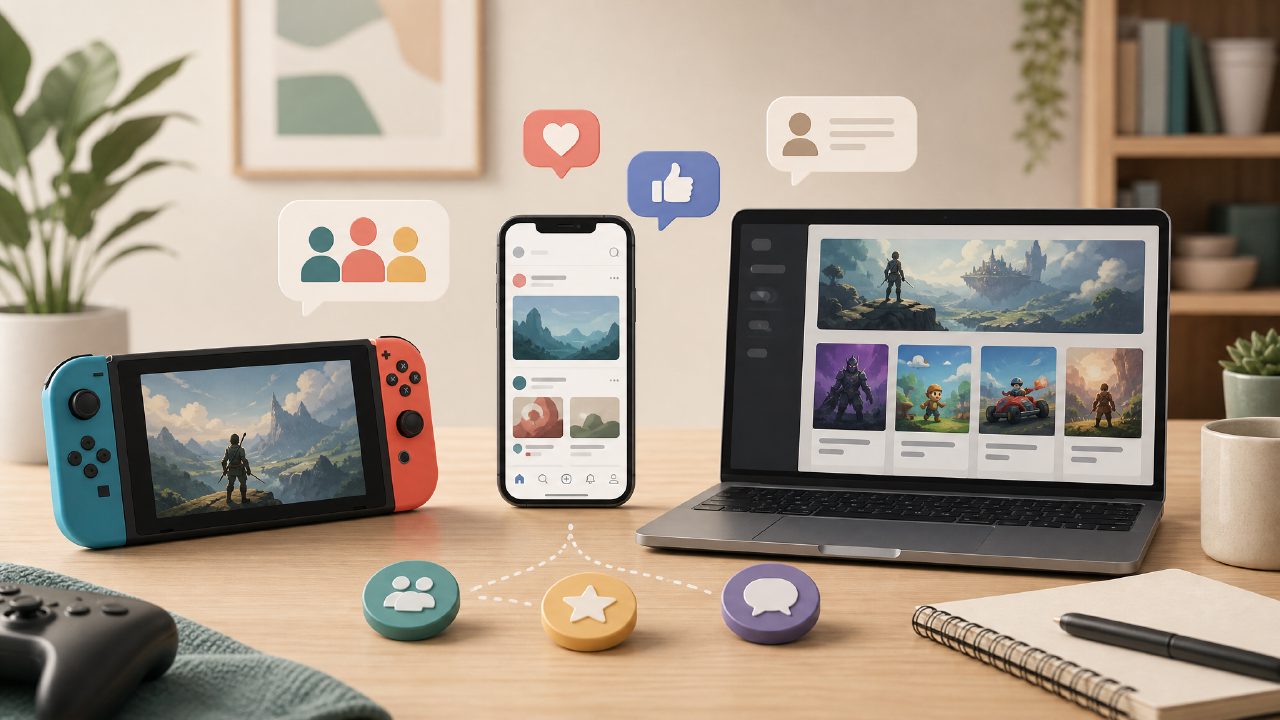
Every time you open your Switch and want to find some new games to play, isn't your first reaction to go into the eShop? And then you get frustrated by the slow loading speed and the bare-bones filtering interface. There are few Chinese games, the rating system is practically nonexistent, and the recommendation algorithm is basically guesswork—after browsing for ages, not only do you not buy anything, but even the thought of "want to try" nearly fades away.
That's why many people have started turning to specialized communities and recommendation tools. It's not about money; it's the time and cost of choice that really wears you down. The solutions for game recommendations on the market essentially fall into a few categories: pure player comment sections like Reddit, domestic gaming forums, and communities like "Star Bar" that bundle recommendations, reviews, and team-up services together. Today, no fluff—let's compare these horizontally on the issue of "how to choose a game" and see which is more reliable.
Mainstream game recommendation channels all have their own flaws
The eShop itself? The "Best Sellers" list is basically welded in place by old friends like "Overcooked" and "Minecraft." Not that they're bad, but I want to find something fresh. The demand for "two-player Switch games" is huge, yet the eShop can't even be bothered to make a proper tag. Search "2-player co-op," and the results might surprise even you.
What about browsing comment sections on Douban, Xiaohongshu, or Gamersky? There's plenty of information, but most of it is "just for fun" style recommendations. A positive review might just say "nice graphics," and a negative one "a bit hard." If you're looking for "Switch game recommendations" or "indie game recommendations," you have to manually flip through dozens of posts, bookmark five notes, and after filtering, half of them are not even available in your region. Extremely inefficient.
Reddit's r/NintendoSwitch is high quality, but the language barrier and lack of purchasing channel integration mean domestic users still have to find their own way to buy after referencing it. The information chain is clearly broken.
Star Bar's recommendation logic is a bit more "noisy" than you think, but more down-to-earth
Star Bar as a community is more like a small gaming circle run by "real people" rather than just a recommendation tool. Instead of throwing out a "game ranking list" for you to browse on your own, it connects the two things: "finding people to play with" and "finding good games."
For example: you want to find "two-player Switch games." In Star Bar, there are recommendation posts based on family membership carpool scenarios. Not the kind of reposted info flow of "recommended ten two-player games," but real experiences written by people who just carpooled and played a few games. This kind of scenario-based recommendation is much more useful than cold tag pages.
Also, its "Game Encyclopedia" is much clearer than the eShop's list. It breaks down games by type, number of players, party attributes, etc., so you're not blindly browsing in broad categories like "Adventure" or "Role-Playing." You can directly get a shortlist of "suitable for two, not hardcore, can pause anytime," and the actual match rate is much higher than the eShop's default search.
How to choose—depends on what type of player you are
If you're the kind of user who "already knows what to buy and just wants the lowest price," then Star Bar's value to you is limited. You might be better off going to a discount tracking site.
But if you fall into any of the following types, then Star Bar as a community really has an advantage:
- Social players looking for "two-player Switch games" to save the mood at holiday parties. Star Bar often has posts sharing real party play feedback, which is more reliable than official trailers.
- Newcomers who just started and are still at the "where to begin" stage with "Nintendo game recommendations." Veteran players in the community break down the entry pace in detail.
- Those interested in indie games but unsure which ones are worth the time. Star Bar's "indie game recommendation" section rarely pushes games that are all about nostalgia but not fun, because commenters will outright criticize them.
- Those who want to save money by pooling memberships and maybe find a like-minded friend. This kind of need is Star Bar's core business, naturally adding a layer of trust compared to other platforms.
Drawbacks do exist. The community's content volume is certainly not as large as those big forums. If you only seek breadth of information and want to "read a review today and download tomorrow," the update frequency here might leave you wanting more.
The conclusion: Stop using the eShop as a search tool
Nintendo's store has been poorly made for a long time, and it's not like we expect it to improve. To efficiently choose games, it's better to split things up—leave recommendations to communities with real player feedback, rather than dealing with the cold shoulder of the official store. Star Bar wins by offering "recommendations with context, feedback, and follow-up purchase support," not by dragging time with a bunch of pretty game covers.
If you're already fed up with the eShop, take a glance at those "Switch game recommendations" and "game rankings" on Star Bar—they might work better than an hour of your own browsing.
Comments
Leave a Comment