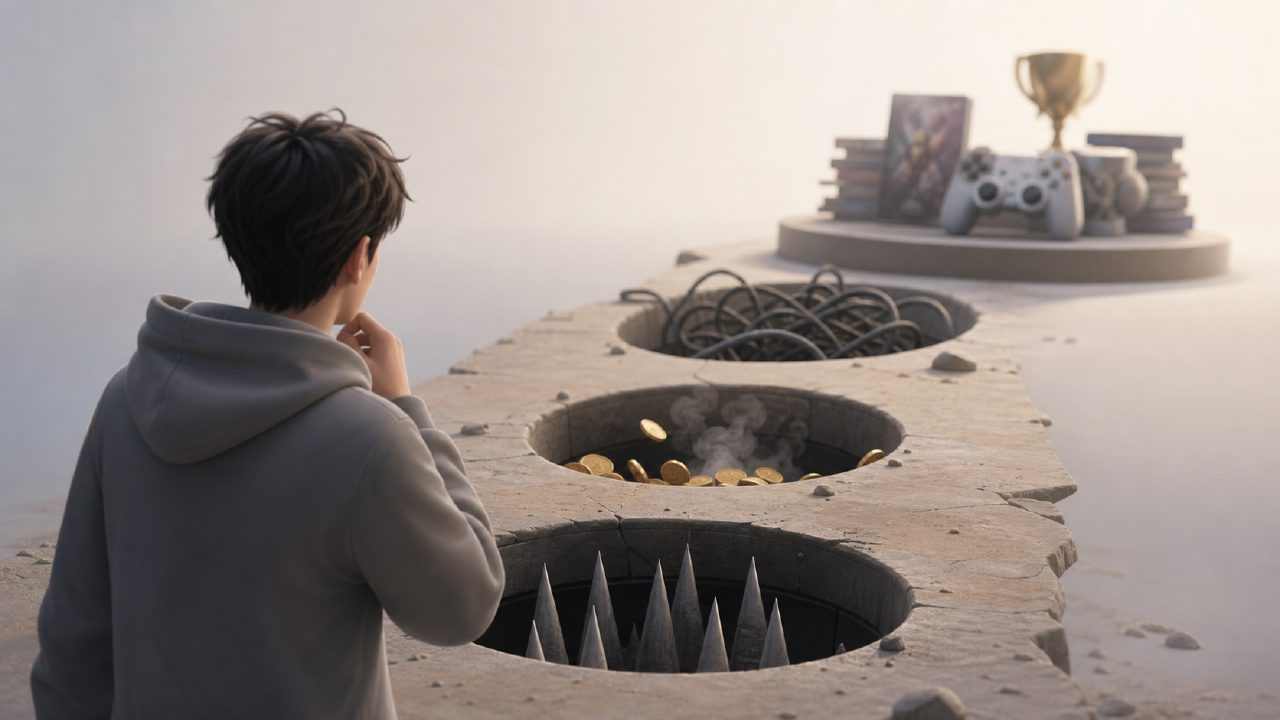
When you look at game rankings, do you do this too: first scan the Top 10, find a bunch you've never heard of, flip a few more pages and feel they're all similar, then randomly pick a high-rated one, only to end up with a game that collects dust after an hour of play?
This isn't your problem—it's that the "ranking" itself has pitfalls.
Most game rankings on the market are based on Metacritic scores or sales. But high-scoring blockbusters ≠ the games you'll like, and sales hits ≠ games you'll actually enjoy. For example, some "media-rated masterpieces" make you watch a half-hour cutscene before you can move, dragging the pace so much you question your life choices; meanwhile, niche but fun indie game recommendations, due to their small sales volume, can't even make it onto mainstream lists. If you buy based on rankings alone, your chances of stepping on a landmine are pretty high.
Don't Just Look at Scores—Look at Who's Scoring
Many rankings put The Legend of Zelda: Breath of the Wild and Xenoblade Chronicles 3 together, both rated above 9. But these two games are completely different genres—one focuses on exploration and physics interactions, the other on story and system depth. If you just want to pick up a game and unwind for 10 minutes, a story-driven, slow-paced title from a Nintendo game recommendation list might not suit you at all.
An even more subtle pitfall: media scores often favor "cinematic storytelling" or "innovation," while overlooking "instant gratification" and "replay value." This is especially obvious in two-player Switch game rankings. Media outlets will give It Takes Two extremely high scores, but if you're playing with a friend who isn't a regular gamer, you actually need party games with simpler controls and higher tolerance for mistakes. Before looking at rankings, ask yourself: do you want to experience a story, or just mess around with friends?
The "Seasonal Dish" Trap in Rankings
Many lists are sorted by "popularity," so new games shoot to the top as soon as they're released. But if you follow the hype and buy a game at launch, it might cost you 300 to 400 yuan, only to find it has no replay value after finishing it. In contrast, some "evergreen" titles that have stayed on the charts for years with strong ratings—like Splatoon 3 or Mario Kart 8—can be played for hundreds of hours without getting boring.
Before buying, I suggest you do two things: first, check the game encyclopedia for actual screenshots and player reviews, not just the score number; second, search for the game's "long-term reviews" to see if people are still playing it after six months. Many annual game of the year titles fade into obscurity once the hype dies down—that's the biggest waste of money.
The Inflated Nature of Ranking Numbers
The same game can have wildly different rankings on different platforms. Some platforms mix "free games" with "paid games" to make the data look better; others list DLC and the base game separately, so a high score you see might just be for a DLC bundle. Not to mention, some third-party rankings include paid promotions, so the rankings aren't purely based on user口碑 (word of mouth). Therefore, don't decide based on a single ranking—it's best to cross-check two or three sources.
Another easily overlooked point: rankings rarely show labels like "better for single-player" or "better for multiplayer." You might buy the number one masterpiece, only to find at a party that it doesn't support local multiplayer—that's when you realize you've been duped. So when searching, remember to add keywords, like directly searching for two-player Switch games instead of just looking at overall rankings.
Don't Treat Rankings as the Final Answer
Rankings are a starting point, not the end. They help filter out popular options, but whether a game suits you depends on subjective factors like gameplay, art style, difficulty, and playtime. If you find it too troublesome to check each one, consider referring to Xingba's Switch game recommendations or using the game encyclopedia to filter by type and preference—that's much more reliable than blindly scrolling through rankings. After all, spending time on games that are truly fun, rather than on lists of what "should be fun," is the key to saving money and frustration.
Comments
Leave a Comment